Perishable food storage is a race against time, temperature, and human error. A crate of strawberries may look acceptable today, then lose value overnight. This is why use FIFO racking systems for perishable food storage deserves careful attention from warehouse managers, retailers, and food manufacturers.
The United Nations Environment Programme reported that 1.05 billion tonnes of food were wasted in 2022. The FAO has also estimated that 13.2% of food is lost after harvest, before retail. Better stock rotation cannot solve every loss. It can, however, make product movement more visible and consistent. The Global Cold Chain Alliance’s 2020 report recorded approximately 719 million cubic metres of global cold-storage capacity. That scale makes small process failures expensive.
FIFO racking places older inventory at the front and replenished stock behind it. Gravity-flow lanes can move cartons smoothly toward picking faces. Labels, dates, and temperature checks become easier to verify. MIT supply-chain professor David Simchi-Levi has stated, “The key to supply chain management is visibility.” FIFO supports that visibility at the pallet and case level.
But FIFO is not magic. A blocked lane, unclear date label, or rushed picker can defeat a well-designed system. Experience matters. So does daily discipline. This introduction examines ten practical reasons to use FIFO racking, from reducing expiry risk to improving labor flow and inventory accuracy. The goal is not merely a fuller warehouse. It is fresher food, clearer decisions, and fewer costly surprises.
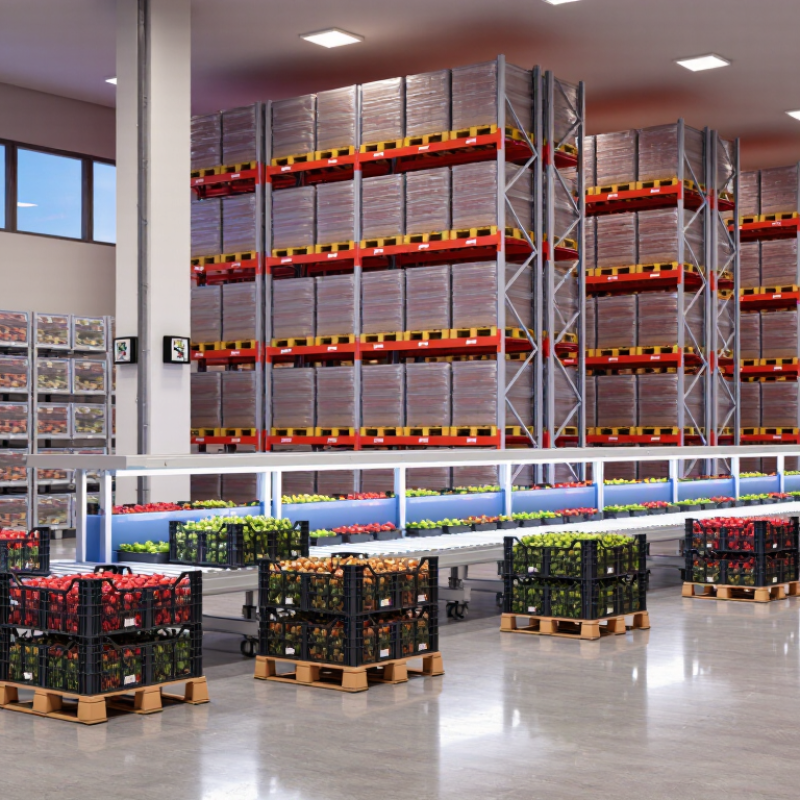
Perishable food storage leaves little room for guesswork. FIFO racking, or first in, first out, keeps older cases visible and accessible. Products loaded earlier move toward the picking face, while newer deliveries stay behind them. This physical sequence supports proper stock rotation without relying only on memory or handwritten notes. In a chilled room, workers can see dates, lot details, and package condition during each pick. That matters when a carton has a short remaining shelf life. It also reduces unnecessary handling. Good visibility helps.
A well-planned layout places frequently picked items at comfortable working heights. Gravity rollers or inclined lanes can guide cases forward after each withdrawal. Clear labels should show receipt dates, use-by dates, and storage zones. Staff still need to verify these details. Racking cannot replace trained judgment. A damaged seal, warm package, or unclear label should trigger a hold for inspection. In practice, small differences in carton size can interrupt smooth movement. Adjustable lanes and routine checks help, though they are not perfect.
FIFO works best when receiving and picking follow the same discipline. New stock should enter from the replenishment side, not the front. Pickers should remove the oldest acceptable case first and record exceptions immediately. Daily checks can reveal empty lanes, blocked rollers, or products approaching their use-by date. Temperature logs add another layer of control, especially for meat, dairy, and prepared foods. The system may slow picking during busy periods. That trade-off deserves review, because speed without rotation can create avoidable waste and quality risks.
Top 10 Reasons to Use FIFO Racking for Perishable Foods
FIFO racking helps older stock leave the warehouse before newer stock. This simple sequence protects freshness. Workers load new cartons from the rear and pick older cartons from the front. Clear access reduces hidden cases, crushed packaging, and forgotten dates. It also supports safer temperature control by limiting unnecessary pallet movement. FIFO is not magic. A rushed team can still mislabel a pallet.
The 2024 UNEP Food Waste Index Report estimates that 1.05 billion tonnes of food were wasted globally in 2022. Retail, food service, and households generated nearly one-fifth of available food waste. Better stock rotation cannot solve every loss, but it can reduce avoidable expiry. FAO reports that 13.2% of food was lost globally between harvest and retail in 2021. Perishable warehouses sit inside this vulnerable chain. Every extra day matters.
FIFO lanes also improve date checks, replenishment planning, and order accuracy. Staff can see short-dated products without climbing through mixed pallets. Temperature logs become easier to match with specific lots. The 2023 Food Code recommends controlling time and temperature for safety-sensitive foods. That principle supports disciplined rotation practices. Still, damaged cartons, inaccurate labels, and poor demand forecasts weaken the system. Managers should review expiry records weekly and measure discarded kilograms, not just storage capacity. Small changes matter.
FIFO helps warehouse teams use products with the shortest remaining storage window first, supporting freshness, food safety, and waste reduction. The chart shows the maximum typical refrigerated holding time for selected perishable foods, based on public food-safety storage guidance.
Key takeaway: Foods with shorter storage windows, such as fresh poultry, ground meat, and fish, need especially consistent FIFO rotation to reduce expiration-related losses.
Perishable foods can lose quality quickly when older stock hides behind newer deliveries. FIFO racking keeps earlier-arriving cartons visible and accessible, helping staff move them before later stock. This simple flow reduces forgotten products, unnecessary waste, and unsafe storage delays. It also makes daily checks more practical. Workers can read lot numbers, production dates, and use-by dates without emptying an entire shelf.
Food safety improves when rotation connects with temperature control. A chilled rack should support clear aisle access, stable airflow, and accurate temperature monitoring. Staff can inspect leaking packages, damaged seals, or swollen containers during each picking round. Separate locations for raw and ready-to-eat foods reduce cross-contact risks. Clear labels also help supervisors trace a questionable batch faster. Small details matter.
FIFO does not guarantee safe food. It only improves control. A newer delivery may have an earlier use-by date, so date checking must guide rotation. In real warehouses, rushed workers can place cartons incorrectly. I have seen neat systems fail when labels face inward or pallets block inspection points. Short training refreshers, written checks, and routine audits can expose these weak spots. The process should be reviewed after temperature alarms, stock errors, or customer complaints. Even an organized rack needs human judgment.
FIFO racking makes perishable-food warehouses easier to control during daily picking. Products received first move toward the front, while newer stock stays behind. This simple flow supports date rotation, clearer replenishment, and fewer unnecessary touches. It also reduces picker travel when fast-moving items occupy accessible lanes. The warehouse feels less like a maze.
The operational value is measurable. The FAO’s 2022 food-loss report estimated that 13.2% of food is lost between harvest and retail. Better stock visibility cannot solve every loss, but it can prevent avoidable expiry inside storage. FIFO locations also help teams check lot codes, assign pick paths, and identify short-dated inventory earlier. The UNEP Food Waste Index Report 2024 reported 1.05 billion tonnes of food waste in 2022 across retail, food service, and households. Warehouse discipline is only one part of that problem, yet it remains a practical control point.
For order picking, consistent lane logic can improve accuracy, replenishment timing, and training speed. Supervisors can compare pick errors, dwell time, and expired cases by zone. Digital records strengthen traceability when receiving and dispatch teams follow the same rules. Still, FIFO is not magic. Poor labeling, blocked lanes, or rushed picking can defeat the layout. A slightly slower first week may be necessary while workers learn date checks and exception handling. Experienced operators should review the design regularly, because demand changes, and yesterday’s best slot may become today’s bottleneck.
| No. | Reason to Use FIFO Racking | Operational Benefit | Effect on Order Picking | Relevant KPI | Priority |
|---|---|---|---|---|---|
| 1 | Reduces product aging | Older inventory is positioned for retrieval before newer inventory, helping maintain product freshness and usable shelf life. | Pickers can select the earliest received or earliest dated stock without searching through mixed pallets. | Average inventory age; remaining shelf life at shipment | Critical |
| 2 | Limits spoilage and waste | Systematic stock rotation lowers the risk that older food remains hidden behind recently received cases. | Fewer expired or deteriorated items are discovered during picking, replenishment, or cycle counting. | Waste rate; write-off value; spoilage units | Critical |
| 3 | Improves date-code control | Storage locations and inventory records can be organized by receipt date, production date, or expiration date. | Pickers have a clear sequence for selecting lots and can verify date codes more consistently. | Date-code compliance; lot accuracy; expired-pick incidents | Critical |
| 4 | Supports food traceability | Separating and sequencing lots makes it easier to identify where products came from and where they were dispatched. | Lot numbers, receiving dates, and dispatch details can be checked with fewer location ambiguities. | Traceability response time; lot-record accuracy | High |
| 5 | Shortens picker travel | Flow-through lanes create a defined replenishment side and picking side, reducing unnecessary movement. | Pickers can work from the accessible face of the lane instead of moving pallets to reach older stock. | Travel distance per order; picks per labor hour | High |
| 6 | Speeds replenishment | Gravity lanes or roller-supported channels can move reserve stock toward the picking face as inventory is removed. | Replenishment tasks become more predictable and are less likely to interrupt active picking. | Replenishment cycle time; pick-face availability | High |
| 7 | Uses storage space efficiently | Lane-based storage can provide high-density organization while preserving a clear product-flow direction. | More stock can be kept close to the picking face with fewer blocked aisles and less double handling. | Storage density; space utilization; blocked-location count | Medium |
| 8 | Improves inventory visibility | A defined front-to-back flow makes empty, partially filled, and aging lanes easier to identify during inspections. | Pickers can quickly confirm product location, quantity, and rotation order before scanning or lifting cases. | Location accuracy; inventory-record accuracy; search time | High |
| 9 | Reduces product handling | A planned flow reduces the need to move newer cases aside to access older ones, helping protect packaging and food quality. | Fewer touches can reduce crushing, dropped cases, label damage, and picking delays. | Touches per case; damage rate; handling time | Medium |
| 10 | Standardizes warehouse workflows | A consistent receiving, replenishment, rotation, and dispatch sequence makes procedures easier to train and audit. | Pickers follow the same directional process across shifts, reducing variation and process errors. | Order accuracy; training time; procedure compliance | High |
FIFO racking moves older stock toward the picking face. New deliveries stay behind it. This simple flow reduces forgotten cartons and unnecessary product loss. In a chilled warehouse, clear pallet positions can prevent a box of lettuce from sitting for another week.
Lower waste directly protects margins. Fewer expired items mean fewer disposal costs and less money tied up in replacement orders. Staff also spend less time searching for older inventory. That saved time matters during busy receiving periods. It can reduce rushed handling and temperature exposure.
Lower waste directly protects margins.
Good FIFO control needs more than racking. Teams should record receiving dates, inspect labels, and check cooler temperatures daily. A visible date label helps workers make faster decisions. For products with different expiry dates, FEFO may be more accurate than strict FIFO. The earliest expiry should leave first.
There is a weakness. FIFO cannot repair poor forecasting or uneven demand. Overstocked berries will still spoil, even in an efficient rack. Managers should compare sales records with delivery quantities each week. A short review may reveal slow-moving stock, repeated picking errors, or shelves that encourage hidden inventory. Small layout changes can then improve rotation without adding storage space.
FIFO means “first in, first out.” Older acceptable cases move toward the picking face. New deliveries stay behind them. Simple flow.
Workers can see receipt dates, use-by dates, and package condition during picking. This reduces forgotten stock and avoidable expiry. It is helpful, not magical.
Staff should replenish from the rear or designated replenishment side. Pickers remove the oldest acceptable case from the front. Mixing directions weakens rotation.
Labels should show receipt dates, use-by dates, lot details, and storage zones. Clear print matters in chilled rooms. Tiny labels fail sometimes.
No. Workers must check damaged seals, warm packages, unclear labels, and unusual carton conditions. These items should be held for inspection. Judgment remains necessary.
Earlier picking gives short-dated products more opportunity to leave storage. It can reduce expired cases and unnecessary pallet movement. Demand errors still create waste.
Consistent lanes can shorten travel for fast-moving items and improve pick accuracy. Supervisors can compare errors, dwell time, and expired cases by zone. Busy periods may slow the process.
Teams should inspect empty lanes, blocked rollers, date records, and temperature logs daily. Managers can review discarded kilograms weekly. The layout deserves regular criticism.
FIFO racking is an effective solution for managing perishable foods because it ensures that the oldest products are used or shipped first. This approach supports accurate stock rotation, helps preserve freshness, and reduces the risk of products expiring before use. By keeping inventory organized and clearly accessible, it also strengthens food safety practices and makes expiration-date control more reliable. Understanding why use FIFO racking systems for perishable food storage is essential for warehouses that handle products with limited shelf lives.
In addition to protecting product quality, FIFO racking improves daily warehouse operations. Its structured layout can make order picking faster, reduce unnecessary product handling, and improve inventory visibility. These benefits help lower waste, minimize replacement costs, and make better use of available storage space. Overall, FIFO racking supports a more efficient, consistent, and cost-effective approach to perishable food management while helping businesses maintain dependable service and product standards.

Ciho Racks