Storing timber, pipes, ladders, conduit, and other oversized products demands more than available floor space. Hardware stores face narrow aisles, changing inventory, customer traffic, and frequent handling. A careless stack can block emergency routes, damage products, or create falling-object hazards. Safe storage must support sales, replenishment, inspections, and quick customer access.
This guide explains how to store long and bulky items in a hardware store using seven practical tips. These recommendations focus on stable racks, visible labels, controlled overhangs, clear walkways, and regular checks. They also consider real store conditions, including wet floors, uneven bundles, rushed restocking, and limited backroom capacity. Small details matter. A loose strap can become a serious problem.
John J. Bartholdi III, a warehouse logistics expert at Georgia Tech, has emphasized, “The warehouse is not a place to store inventory; it is a place to move inventory.” That principle applies strongly to hardware retail. Long products should remain secure without becoming difficult to retrieve. Their location should support movement, not interrupt it.
Some layouts may look efficient but fail during busy periods. I have found that a rack that works on paper may become awkward when customers carry six-meter boards. That deserves a second review. Measure the actual handling path, not only the storage bay. Then adjust the plan around workers, customers, and product weight. The safest system is usually simple, visible, and easy to maintain every day.
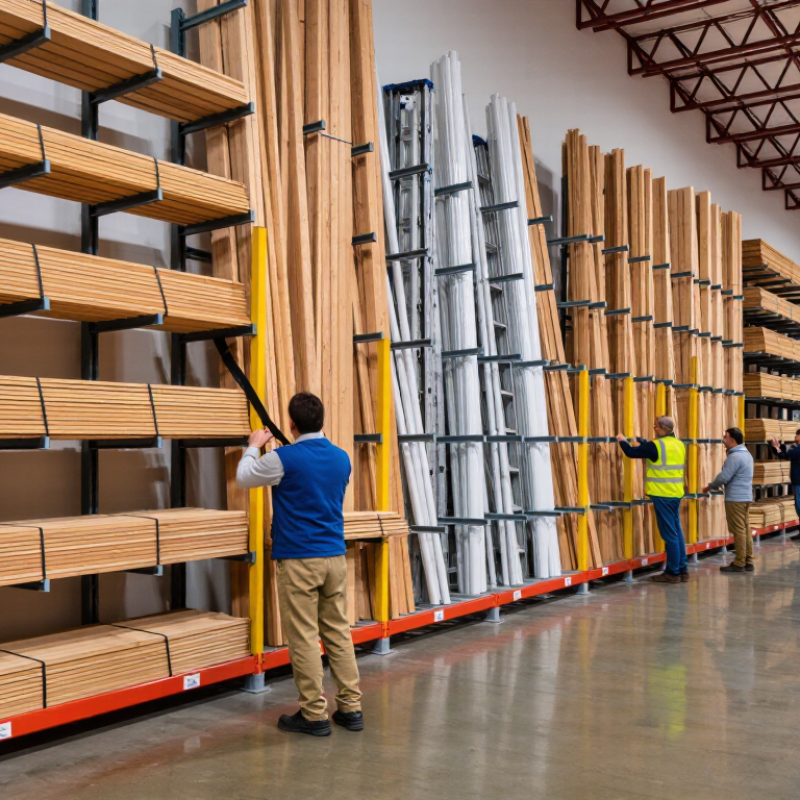
In a hardware store, bulky-item storage begins with accurate measurements, not spare floor space. Measure length, width, height, and the widest irregular point. Record the packaged dimensions too. Packaging often adds several centimeters. Weigh each item, including wrapping, straps, and attached parts. A long pipe bundle may look light but become unstable when lifted. Check its center of gravity. It may not sit evenly on a shelf. Leave clearance around corners, doors, sprinklers, and walking routes. Store items only on shelving rated for their actual weight. Do not rely on appearance.
Handling needs deserve equal attention. Plan the movement from receiving areas to the storage position. Measure doorway width, aisle space, turning areas, and ramp angles. Test whether a trolley can pass without striking displays or people. Long items may require two trained workers, especially when visibility is limited. Use secure supports at several points to prevent bending or rolling. Keep heavy sections low, and place lighter pieces above them. Mark the storage position with the item’s dimensions and weight. Clear labels reduce guesswork during busy hours. I have seen teams measure the shelf but forget the trolley handle. That small oversight caused a difficult turn. Review the setup after restocking, because repeated movement can loosen supports or shift the load. Safety checks are rarely perfect. They improve when staff question yesterday’s arrangement.
| Tip | Typical Bulky Item | Approximate Size | Typical Weight | Handling Needs | Recommended Storage Practice |
|---|---|---|---|---|---|
| 1 | Lumber and wooden boards | 2.4–4.8 m long; commonly 38–240 mm thick | About 2–35 kg per piece, depending on species and dimensions | Long pieces can flex, slide, or create an uneven load. Two-person handling may be needed for long or heavy boards. | Use level, evenly spaced supports along the length. Keep heavy boards at lower levels and secure projecting ends to prevent movement. |
| 2 | Drywall and plasterboard sheets | Typically 1.2 × 2.4 m; thickness commonly 9.5–15 mm | About 20–40 kg per sheet, depending on thickness and type | Large sheets are awkward and vulnerable to edge damage. Use two people or a panel carrier for safe movement. | Store flat on a dry, level surface with full support. Keep off damp floors and avoid unsupported leaning that may cause warping or breakage. |
| 3 | PVC, metal, or conduit pipe | Usually 2.4–6 m long; diameters commonly 15–160 mm | About 1–30 kg per length, depending on material and diameter | Round items can roll unexpectedly and may extend beyond a rack. Bundle control and clear travel paths are essential. | Place in cradle racks or bins with end stops. Separate sizes clearly, restrain bundles, and store heavier pipes at lower levels. |
| 4 | Doors and large panels | Commonly 0.6–1.0 m wide × 1.9–2.1 m high | About 15–45 kg per unit, depending on material and construction | The tall, flat shape catches air and is difficult to grip. Use two people and protect corners, faces, and hinges. | Use padded vertical A-frames or dedicated carts. Prevent leaning against unstable surfaces and keep units separated to avoid scratching. |
| 5 | Ladders and long hand tools | Approximately 1.5–6 m long | About 5–30 kg per item | Long items can swing into people, shelves, or lighting. Control both ends and use a spotter in narrow aisles. | Mount horizontally on secured brackets or store in a designated vertical rack with retention straps. Keep aisle clearance and emergency access unobstructed. |
| 6 | Bagged materials and compact bulk products | Common bags: 20–40 kg; pallet footprints often about 1.0 × 1.2 m | Individual bags commonly 20–40 kg; loaded pallets may exceed 500 kg | Loads can shift, tear, or exceed manual-lifting limits. Palletized movement should use rated material-handling equipment. | Keep bags on sound pallets, protect them from moisture, and stack only within the packaging and rack limits. Place dense products on lower levels. |
| 7 | Large fixtures and boxed equipment | Often 0.6–1.2 m wide and 0.6–2.1 m high | About 25–150 kg per unit, depending on contents | Boxes may have a high center of gravity or limited handholds. Check the package condition and use a trolley, pallet jack, or team lift as appropriate. | Keep heavy units low, secure tall packages against tipping, label weights clearly, and maintain a stable route from storage to the sales area. |
Measure its length, width, height, and widest irregular point. Include packaged dimensions. Packaging can add several centimeters.
Yes. Weigh the item with wrapping, straps, and attached parts. Appearance can be misleading.
Measure doorways, aisles, turning spaces, and ramp angles. Check whether a trolley can pass without striking displays or people.
Use two trained workers for long items when visibility is limited. One person may not control a shifting pipe bundle safely.
Use continuous support, adjustable cradles, or cantilever arms. Several support points help prevent bending and rolling.
Keep heavy sections near the floor. Place lighter pieces above them. This reduces instability during handling.
Use suitable end stops, retaining bars, straps, or mesh panels. Secure both ends. Friction alone is unreliable.
Inspect them weekly, after impacts, after overloading, and after near misses. Check for bent arms, loose anchors, and damaged straps.
Mark each bay with item dimensions, weight, and maximum length. Clear labels reduce hurried decisions during busy hours.
Probably not. Seasonal stock and customer demand change it. Review yesterday’s arrangement instead of trusting it blindly.
Storing long and bulky items safely requires a clear plan based on their size, weight, shape, and handling needs. Before placing materials in storage, assess whether they can be moved safely by one person or require assistance. Select locations away from walkways, doorways, emergency equipment, and busy work areas. Keep long materials balanced and protected from moisture, impact, and unstable surfaces.
Understanding how to store long and bulky items in a hardware store also means using suitable racks, supports, and restraints to prevent bending, rolling, or falling. Group similar materials together, label storage areas clearly, and leave enough space for quick identification and retrieval. Regularly inspect racks, supports, and stored items for damage or instability. Remove hazards promptly, maintain clear access routes, and ensure that every item remains secure throughout its storage period.

 Ciho Racks