How to transition a warehouse from manual to automated racking is no longer a theoretical question. It is a practical response to rising labor costs, tighter delivery windows, and growing inventory complexity. The 2024 MHI Annual Industry Report found that 55% of supply chain professionals already use artificial intelligence, while 83% expect AI to reshape operations. The same report shows strong interest in robotics and automation. However, statistics do not install a safe system.
The transition begins with evidence. Measure pallet movements, order profiles, aisle widths, storage density, replenishment times, and operator travel distances. A warehouse may appear ready for automation, yet poor data can produce an expensive bottleneck. John Paxton, former president and CEO of MHI, said, “The future of supply chains is digital, connected, and automated.” His view supports a connected approach, not a rushed equipment purchase. Automated racking must communicate with warehouse management software, conveyors, scanners, and safety controls.
The details matter. A manual aisle may need reinforced floors, new fire protection, or different pallet tolerances. A pilot zone can reveal jam points before full deployment. It can also expose uncomfortable truths. Some facilities automate storage but leave receiving and picking inefficient. That is not transformation.
Deloitte’s 2024 manufacturing and supply chain research also highlights digital investment as a major operational priority. Yet every warehouse has different constraints. This guide explains the planning, technology selection, workforce preparation, testing, and phased implementation required for a reliable transition. The goal is not maximum automation. It is measurable improvement, safer handling, better space use, and resilient daily performance.
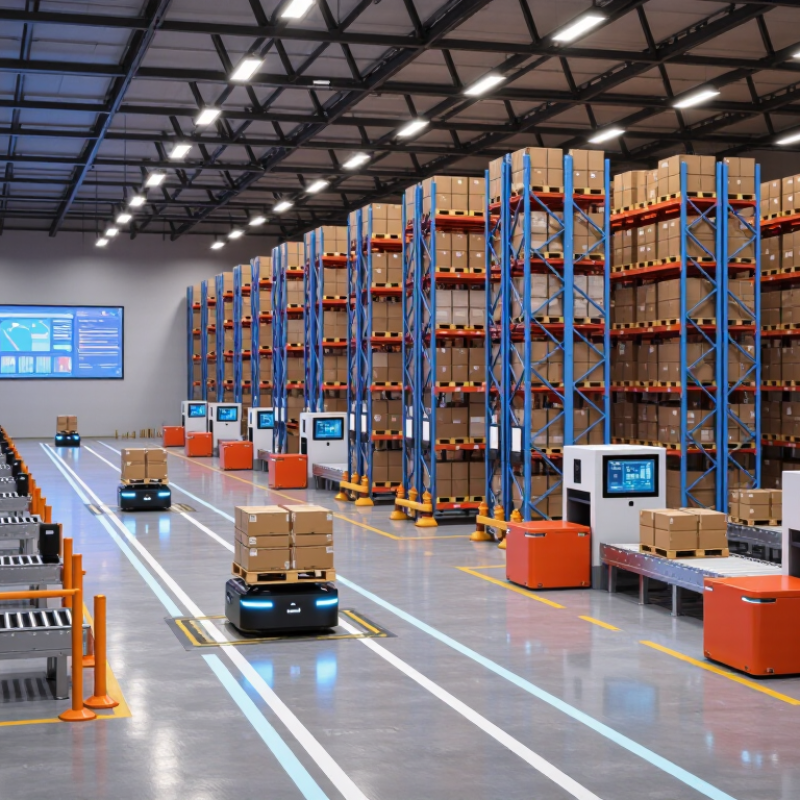
Before automating a warehouse racking system, assess how the facility works today. Measure storage volume, pallet dimensions, product turnover, aisle width, and order peaks. Review the last twelve months of inventory data, not only current averages. Seasonal demand can expose weaknesses that daily reports hide.
Walk the warehouse with operators and maintenance staff. They know where pallets wait, where forklifts slow down, and where damaged goods appear. Check floor strength, ceiling height, fire protection, lighting, and emergency access. Confirm whether the existing racking can support new loads. A detailed safety inspection is essential. Small errors here can become expensive failures.
Tips: Map every movement from receiving to dispatch. Separate fast-moving products from slow stock. Test barcode accuracy before connecting automated equipment. Keep a manual recovery plan for power or software interruptions. Do not automate inefficient processes too quickly. That mistake is common. I have seen teams focus on equipment speed while ignoring poor slotting and unclear inventory records. A short pilot with measured results is usually wiser than a full conversion. Record picking time, retrieval errors, blocked aisles, and worker feedback. Recheck these figures after several weeks. The first design may look efficient, but real warehouse behavior often proves otherwise.
The future layout should follow inventory movement, not current rack positions. Map receiving, storage, picking, staging, and shipping routes. Small measurement errors become costly at high equipment speeds.
Measure aisles, columns, sprinkler lines, emergency routes, floor levels, and structural conditions. Check equipment clearances and maintenance access. Leave room for conveyors, lifts, sensors, and separated pedestrian paths.
Use real order data to classify products by movement, size, weight, and handling needs. Place fast-moving cartons near efficient picking points. Store reserve inventory in deeper zones when suitable.
No simulation is perfect. It can reveal congestion before construction, but packaging variation may still cause surprises. Test unusual cartons, urgent orders, and oversized products during a pilot.
Mark the floor with removable tape. Walk the routes during busy periods. Ask operators where delays occur. Keep a flexible buffer near staging areas, even when the design looks fully optimized.
Record aisle locations, rack positions, product types, pallet sizes, weights, temperatures, and order peaks. Inspect uneven floors and narrow emergency routes. Forklift operators may reveal delays missing from spreadsheets.
Remove obsolete inventory before changing storage locations. Create a digital location map and label temporary positions clearly. Test one small zone with normal, oversized, and urgent orders. Keep it visible.
Train beside the new racking, not only in a classroom. Practice scanning, exception handling, manual recovery, and safe pedestrian movement. Keep a staffed fallback area during the cutover. Expect friction.
Transitioning a warehouse to automated racking begins with a clear assessment of current operations, including inventory characteristics, order profiles, storage density, throughput targets, available space, and existing equipment. The process should then define a future-state layout that optimizes product flow, access, replenishment, and integration with receiving and shipping areas. Selecting suitable storage structures, retrieval equipment, software controls, and communication systems is essential to creating a reliable and efficient solution. A practical plan should explain how to transition a warehouse from manual to automated racking through phased implementation, data preparation, equipment installation, system configuration, and employee training.
Before full deployment, each stage should be tested to confirm safety, accuracy, performance, and operational continuity. Pilot runs, emergency procedures, maintenance planning, and clear performance indicators help identify issues before they affect daily operations. Finally, the design should remain flexible enough to support changing product volumes, future expansion, technology upgrades, and long-term business growth without requiring a complete warehouse redesign.

 Ciho Racks